

1. Misleading Terminology
“If thought corrupts language, language can also corrupt thought.” – George Orwell
Language can be used to promote an agenda. The media must exercise caution when consciously choosing to adopt (or avoid) certain terms.
When it comes to Israel, there are many phrases that have been weaponized. Below is a small sample that downplay realities on the ground, are emotionally charged, or deliberately manipulate international law. The inclusion of any of them within a broadcast, article, or post should immediately raise a red flag:
a. “Cycle of violence” or “tit-for-tat”
b. 1967 borders, or Green Line
c. Genocide, ethnic cleansing
d. Military wing vs. political wing
e. Tel Aviv (when discussing the seat of government)
f. IOF: Israeli Occupation Forces
Passive language also serves to de-emphasize a significant event and/or downplay negative actions.
The Holocaust did not see people die. It was an active genocide of the Jewish people by Nazi Germany. October 7 did not lead to deaths. It was the worst massacre since the Holocaust. The language describing those events should convey their enormity.
"The Holocaust, which saw more than 6m Jewish people die."
The Oct. 7 attack, "leading to the deaths of more than 1,200 people."
Remarkable how, according to @Newsweek, Jews simply die while it writes Israel has "so far killed more than 11,000 people."https://t.co/Q865V6K01m pic.twitter.com/MtwzGhjENi
— HonestReporting (@HonestReporting) November 15, 2023
2. Imbalanced Reporting
Journalism distorts news through disproportionate coverage, presenting only one side of the story, misrepresenting fringe views as mainstream, or burying important contextual information.
A casual reader of this New York Times article would not be able to easily understand that the “Palestinian Detainee” was, in fact, the leader of Islamic Jihad, a terrorist organization. The headline and teaser are written in a way to whitewash him, and the relevant information is not mentioned until the 5th paragraph of the article.
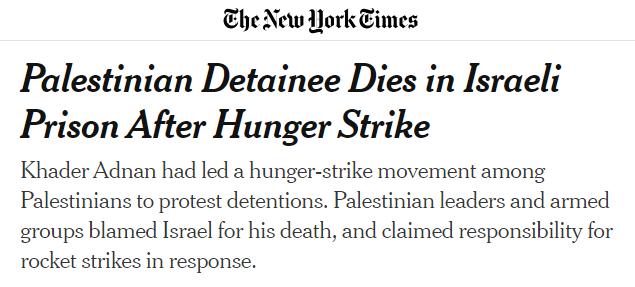
This is a purposeful obfuscation of facts.
3. Opinions Disguised as News
A journalist’s job is to report facts without infecting their own opinion or interpretation of events. Even properly labeled commentary (in the op-ed section or sidebars labeled as analysis) requires a modicum of objectivity. Opinions must be based on accurate information, sound logic, and expressed respectfully.
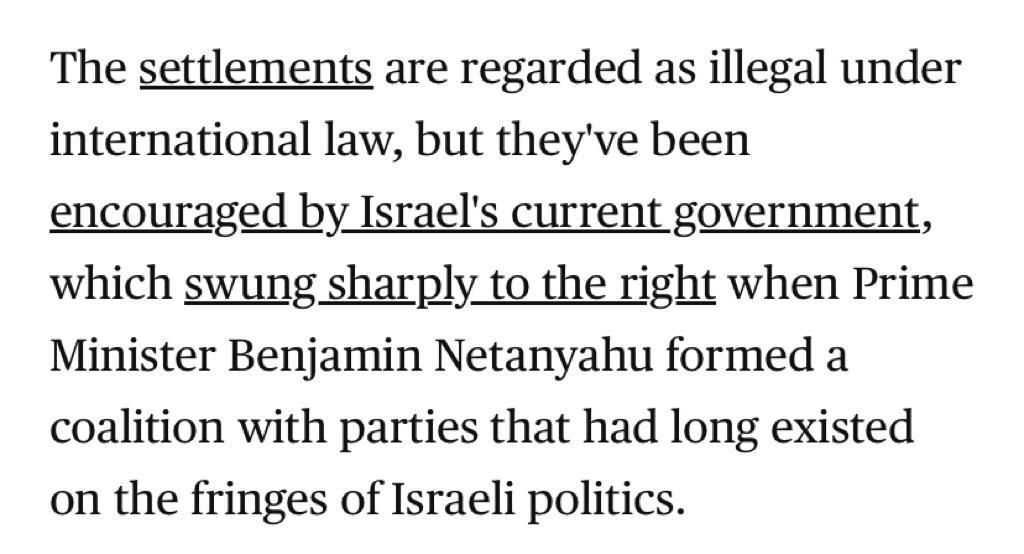
The West Bank and “settlements” are lightning-rod topics. How you refer to the West Bank, and one’s support for settlements or lack thereof, is a litmus test of politics. But “settlements” are not a monolithic group, and their location within the West Bank varies. To use the blanket statement of “settlements are regarded as illegal under international law” is incorrect. Similarly, the West Bank is “disputed” under international law, not occupied.
4. Lack of Context
Context describes the conditions in which something happens. Without a frame of reference for readers, journalists can dramatically distort the true picture.
During Operation Iron Swords, Israel bombed Hamas leaders who were sheltering inside a tunnel complex built beneath the Jabaliya Refugee Camp.
One might ask why Palestinians in Gaza live in a “refugee camp” or why a neighborhood of apartment complexes is referred to as a “refugee camp.”
But there is no question that the way this Washington Post columnist phrased her tweet was purposefully misleading.
They bombed a refugee camp.
A. Refugee. Camp. https://t.co/lz96tZwxlD
— Karen Attiah (@KarenAttiah) October 31, 2023
5. Selective Omission
By choosing to report certain events over others, or withholding key details, the media control access to information.
In the aftermath of Hamas’ October 7 massacre, waves of protests swept across America. At one protest in California, a pro-Palestinian protester hit a pro-Israel protester over the head with a megaphone. That man ultimately died of his wounds.
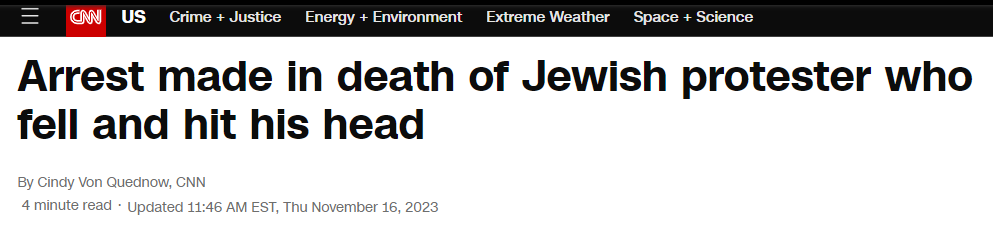
Yet, news outlets across the world minimized the event. To someone who didn’t know the facts, they could believe that the Jewish man simply tripped over his own feet. Or passed out from dehydration and hit his head. Instead of the truth – that the man was killed in a violent interaction with another person.
Above: @latimes accurately headlines that a Jewish man was "hit in the head," reflecting what police have confirmed is a homicide.
Below: @NBCNews simply says he died "after hitting head." No, NBC, homicide isn't something self-inflicted. Fix your headline. pic.twitter.com/hPuR4FvuY2
— HonestReporting (@HonestReporting) November 7, 2023
6. Using True Facts to Draw False Conclusions
Even if all the facts are accurate, it’s still possible for journalists to draw illogical conclusions.
In this example, The New York Times equates Israeli Arabs with Palestinians living in the West Bank. The former are full citizens of Israel. They vote, serve in Knesset, sit on the Supreme Court, and hold leadership positions across every Israeli industry.
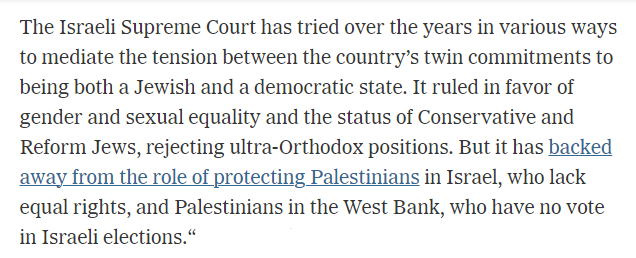
The latter are not citizens. They are eligible to vote in Palestinian elections – however infrequently those are held. Nevertheless, it is the Palestinian government that has disenfranchised them, not the Israeli one.
So, while it is technically true to say that Palestinians in the West Bank “have no vote in Israeli elections,” it is dishonest.
7. Distortion of Facts
Getting the facts wrong. Sometimes this is a result of the 24-hour news cycle and the need to be first to publish. But not always.
The “journalism of assertion” is the idea that reporters can ease up on independent verification of facts if information is directly attributed to someone. But even the most well-meaning of eyewitnesses (which in and of itself isn’t always a given) can have faulty memories or an incomplete understanding of what they witnessed.
Another worrying trend is mistranslation. Arabic has words for Israel and Zionist, yet Western translators frequently cover for antisemitism by translating “Yahud” as “Israeli” instead of “Jew.”
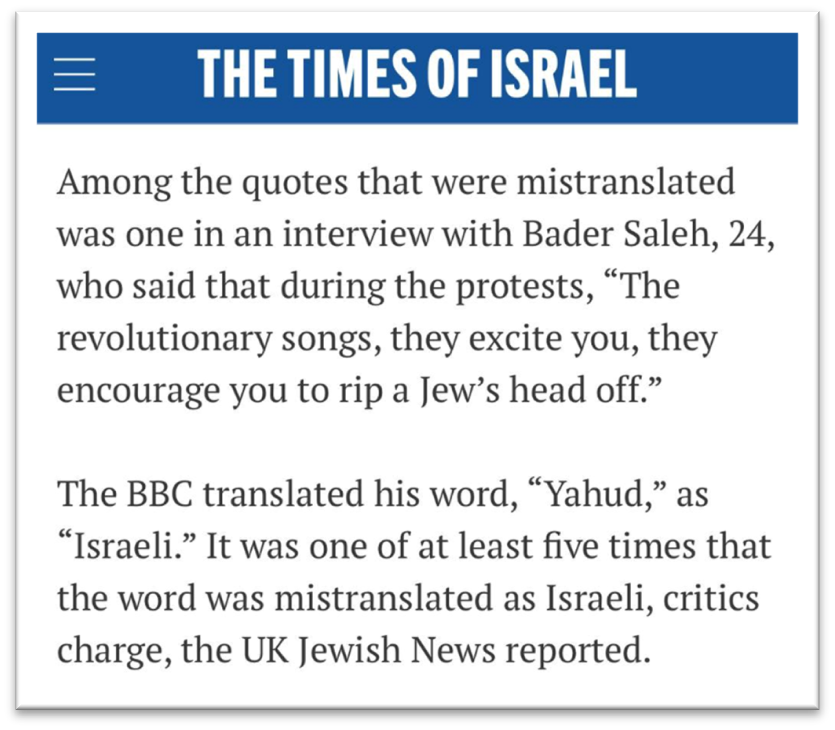
We saw this when a mob stormed an airport in Russia looking for Jews on a flight landing from Israel. They were misrepresented as “anti-Israel protestors” despite their chants specifically targeting Jews. We’ve also seen it in the past with a BBC documentary on Palestinians in Gaza.
Video shows anti-Israel protesters storming airport in Russia, forcing it to close https://t.co/pEBD2276qE
— BBC News (World) (@BBCWorld) October 30, 2023
8. Lack of Transparency
Failing to be open and accountable to readers.
Reporters are human. They have biases. That’s to be expected. Which is why disclosures matter. A simple editor’s note that holds a prominent place within an article can build trust with a reader, allowing them to better judge the veracity of what they are reading.
When CNN journalists were embedded with the IDF in Gaza during Operation Iron Swords, this is how they presented the article.
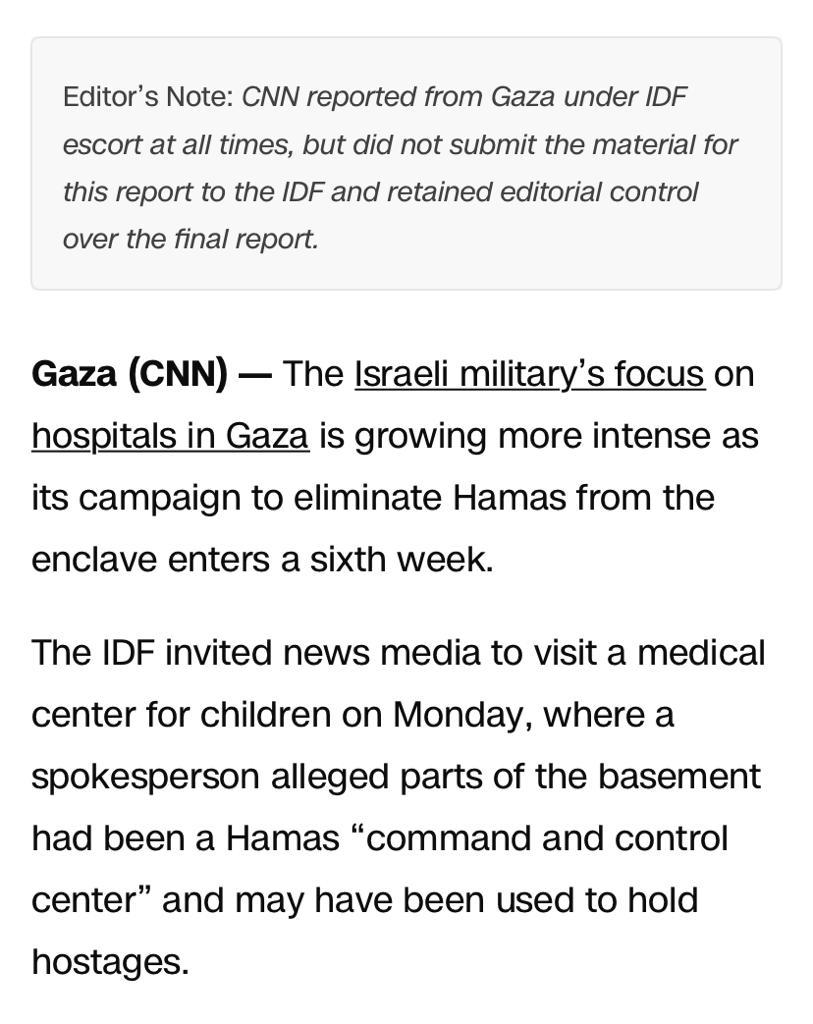
Yet, when journalists report from Gaza, where there is no freedom of the press, there is never any such disclaimer. There is no disclosure that Hamas rules with an iron fist and controls the flow of information.
This lack of uniformity and transparency tricks readers into believing that all information is equally valid, as opposed to helping them understand when some information should be treated with caution.
BONUS – Beware of ‘The Halo Effect’
Reporters commonly cite international agencies, non-governmental organizations (NGOs), activists, and academics as authoritative sources beyond reproach. Their expertise needs to be balanced against a journalist’s duty to independently verify facts.
Just recently, a Human Rights Watch senior employee accused her organization of “years of politicization of its Israel-Palestine work that has frequently violated basic editorial standards related to rigor, balance, and collegiality, when it comes to Israel.”
It is imperative that journalists understand and explain that expertise can exist alongside agenda, and account for that within their reporting.
Liked this article? Follow HonestReporting on Twitter, Facebook, Instagram and TikTok to see even more posts and videos debunking news bias and smears, as well as other content explaining what’s really going on in Israel and the region. Get updates direct to your phone. Join our WhatsApp and Telegram channels!